
The Australian arts and culture scene sports a well-written journal with the improbable title of Kill Your Darlings, taken from William Faulkner’s sage advice that “In writing, you must kill all your darlings” — which I take be the overly clever words and phrases you are so fond of, but which dilute the impact of your work as a whole.
In a recent issue, Nina Culley presents an article about the trend in translated Asian fiction being published in the West, which she dubs “cosy Asian fiction.” I’ll confess to not having read any of this type of work myself, unless you count Murakami’s Norwegian Wood — if that qualifies.
But even without knowing too much about the books themselves, the article makes many telling points about literary trends in general, the nature of publishing, the needs and desires of foreign readers. Perhaps most importantly, I think she’s spotted an emerging trend in Asian fiction that could have wider implications.
Let’s start with the last of these — the trend in “cosy Asian fiction.” She takes a number of approaches to defining this new category, all of which seem to add up. In terms of subject matter, there is a focus on the quotidian details of life — “cats, cafes, and bowls of steaming ramen.” In terms of theme, she sees a rejection of “the conventions of dramatic arcs,” and an avoidance of “heavy-handed moralizing” in favor of “restrained, elliptical storytelling.”
I think she’s onto something here, and it’s not limited to Asia. People are “fatigued by binaries” all across the globe. You can see this among my Catholic friends, who are openly wishing for the return to an Italian Pope. You can see this in the attitudes of the young (including some of my own children) who have abandoned the hero’s journey for the smaller victories of life — the iron pumped, the roll not taken, the parting glass left half-full.
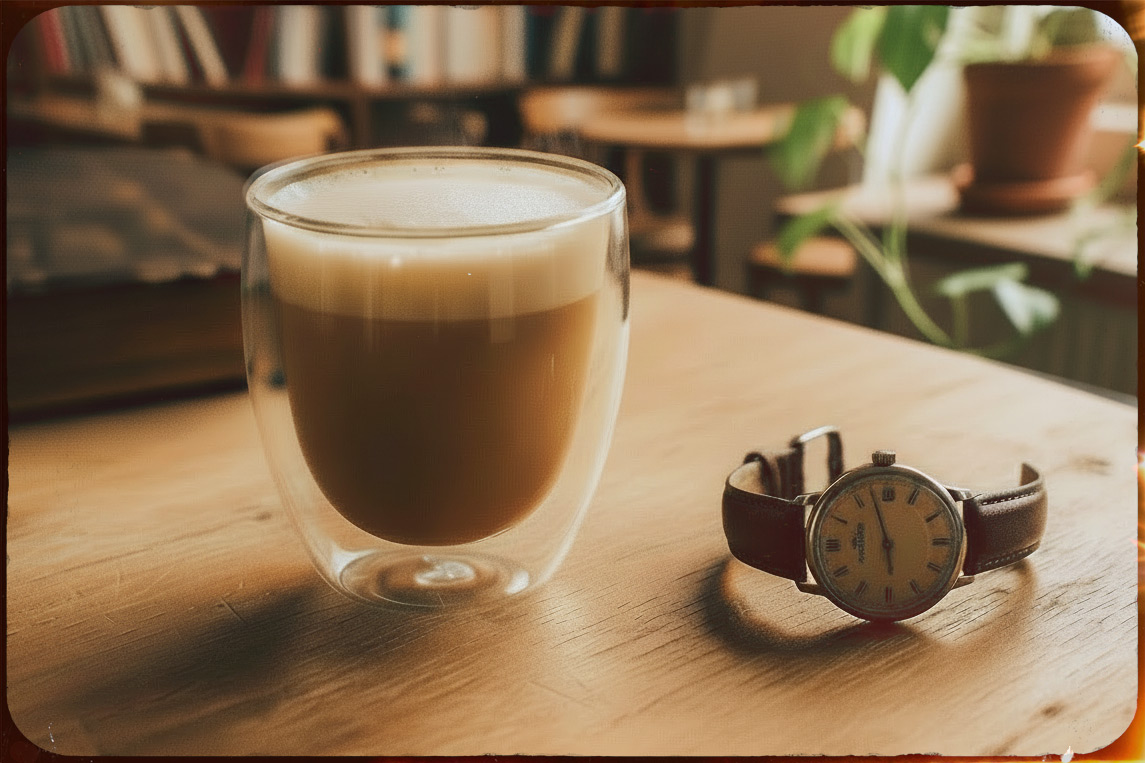
We’re not talking, however, about a return to the self-satisfied and myopic world of the ‘50s. That world is not coming back — our own consciousness won’t permit it. This is where the concept of “magical realism” comes in. It’s everyday life on the surface, but with something added, something new — the adventures becoming adventures of the contemplative, of the psyche, of the soul. A cup of coffee that allows you to recover your past, for example.
Why is this needed? Exactly because people have become exhausted by binaries. You can’t really blame the notion of binaries themselves for our current mess. What is the Tao, after all, but ur-binaries in a perpetual interplay of complementarity and co-creation? The problem rather seems to be with the relationship between the binaries. It’s no longer a playful dance, more like an armed conflict. People are desperate for ways to find resolution.
The answer has historically been spiritual — meditation, contemplation, the search for a satori where the binaries find resolution in their own irrelevance. But the spiritual traditions themselves have become suspect, due in no small part due to the “heavy-handed moralizing” that Culley takes note of.
Magical realism in effect chronicles the search for new forms of resolution — immediately accessible without the burden of a crushing metaphysics. That cup of coffee which offers resolution with the past. That unremarkable job in a combini where daily routine becomes a safe harbor from the Sturm und Drang. Spirit guides that come to you, rather than making you hunt for them.
Culley deserves much credit for noting that these factors are conspiring to bring forth a new form of literature. Also to her credit, she points out its vulnerability to exploitation, due to factors we’ve already discussed in the articles above. It risks becoming a fad, attracting “cool kid” imitators and the inevitable dilution of quality. It risks becoming attractive to foreign readers who start out seeking “authenticity,” but inevitably project their own narratives into stories that do not belong to them. It risks exploitation by that Rube Goldberg contraption, the modern-day publishing industry.
These phenomena occur almost ineluctably with any new art form. It happened with science fiction. It happened with westerns. Try finding a decent romantic comedy on Netflix. I suspect it even happened back in the Heian Period when the Tale of Genji opened up new avenues that were quickly trodden by others.
But just as a fashion can become a fad, it can also become a genre. The issues are real. But there is little to be gained by complaining about them. Distinguishing between legitimate and illegitimate reasons for reading a good book just creates another binary, with its own form of “heavy-handed moralizing.” There is no wrong reason for doing the right thing.