
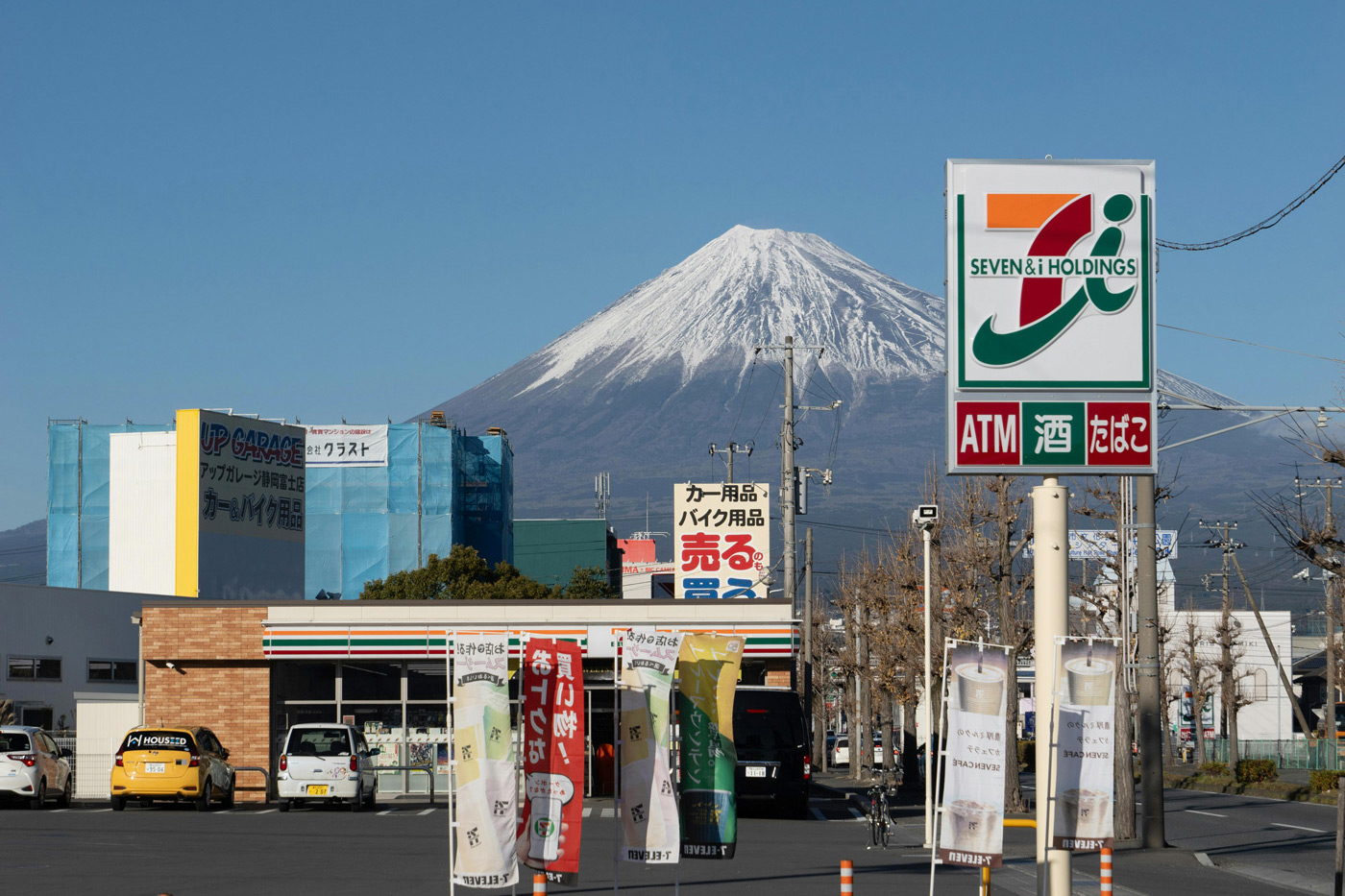
The Japan Times recently published an article discussing Seven-Eleven’s percolating strategy to expand into, of all places, the US. Seems the Japanese parent company, “Seven & I Holdings, Ltd.,” saw its stock tank after a Canadian suitor withdrew its bit to acquire them.
It may come as a surprise that the iconic brand is Japanese-owned. It certainly surprised me when I discovered the fact about a year ago. The chain (originally called “Tote’m”) was founded in Dallas in 1927, changing their name to Seven-Eleven in 1946 to highlight the fact that they would be open both early and late. In those days, I guess, 7am to 11pm were considered long hours.
Japanese retailer Ito-Yokado acquired the rights in Japan, opened its first store in 1974, and acquired a controlling interest in Southland Corporation (the parent company) in 1991. There are now over 21,700 stores in Japan, compared with just 13,000 in all of North America.
Equity markets worldwide tend to place a much greater value on growth opportunities than on flat but stable profits. But as anybody who has visited Japan recently is aware, growth opportunities there are severely constrained. Combinis are everywhere, and the competition is stiff. In my own neighborhood of Yamashina, I can count at least 7 stores within a 10-minute walk — four Seven-Elevens, one Lawson, and two Family Marts (the three dominant brands). And that’s only the ones I know about!
The key demographic seems to be working people who will stop to pick up an o-nigiri (rice ball) or sandwich for lunch, and possibly a quick dinner on the way home. Food sales account for over 68% of revenues. But Japan’s population is in decline (from 128 million in 2010 down to 123 million in 2024, and projected to fall below 120 million in the next year or two) and aging quickly, so new workers may be hard to find.
What’s a poor convenience store chain to do? Expand abroad, of course. And that includes the US, where the parent company is planning to spend a large portion of its expected $13 billion investment. They also intend to introduce their legendary egg salad sandwiches, which no less a connoisseur than Anthony Bourdain praised as “pillows of love.”
It’s an intriguing strategy. As the article notes, matching the food quality and freshness found in Japan will be a challenge, not to mention the delivery logistics. But another challenge is matching up with the car-centric culture of the US. The company seems to be aware of this, having already opened its first drive-thru combini (Dallas) in 2021, in the wake of COVID.
All of this is likely to be good news for us Aspies, who will have more opportunities to land jobs of the kind that Keiko Furukura, the hero of Sayaka Murata’s Convenience Store Woman, found so congenial. See our August issue (or e-mail us to request a copy) for more on this point.